

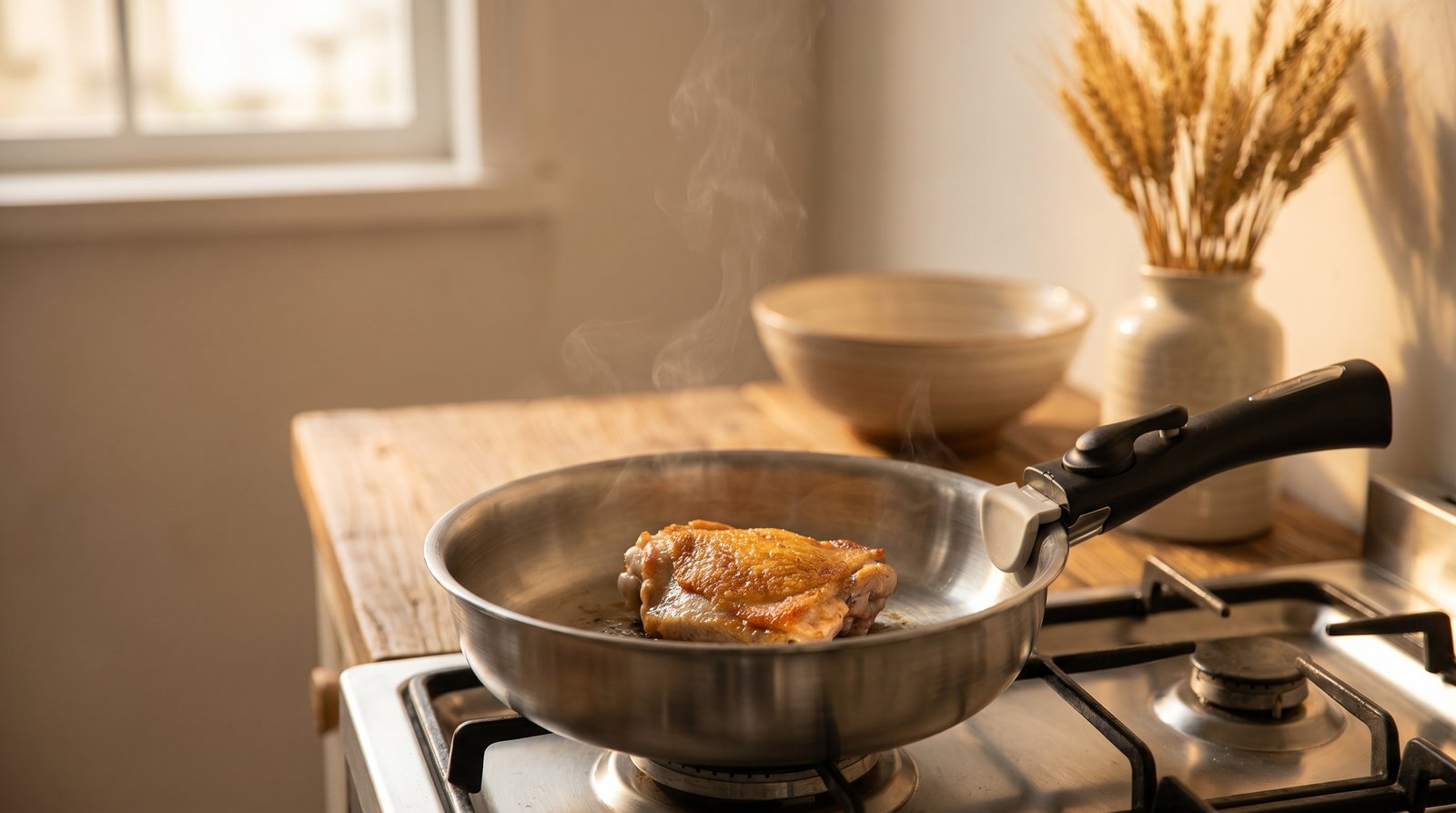
Food sticks to stainless steel for one main reason: the pan is the wrong temperature when the food goes in. A pan that is too cold lets proteins settle into the metal and bond. A pan that is too hot burns the surface of the food before it can release. Add the habit of moving food too soon, and sticking is almost guaranteed.
The fix is three steps. Preheat the pan on medium heat until it passes the water test. Add a thin layer of oil and let it shimmer. Lay the food in and leave it alone until it releases on its own. Do that, and a bare stainless steel pan releases food almost as cleanly as a coated nonstick pan, with no coating to scratch or wear off.
This guide walks through why sticking happens, the water test that tells you the pan is ready, how to control heat, and what to do with a brand new pan.
The real reason food sticks
Stainless steel looks smooth, but under a microscope the surface is full of tiny pits and ridges. When the metal is cold, food (especially protein like eggs, chicken, and fish) settles into them and chemically bonds to the metal as it heats. That bond is what feels like sticking.
When the pan is properly preheated, two things change. The metal expands so the surface evens out, and a thin layer of hot air and steam forms between the food and the metal. The food sears instead of bonding, and it lifts away once a crust forms. Heat, not a coating, is what does the work.
The water test: how to know the pan is ready
This is the single most useful trick for stainless steel. Heat the dry pan on medium for two to three minutes, then flick a few drops of water in.
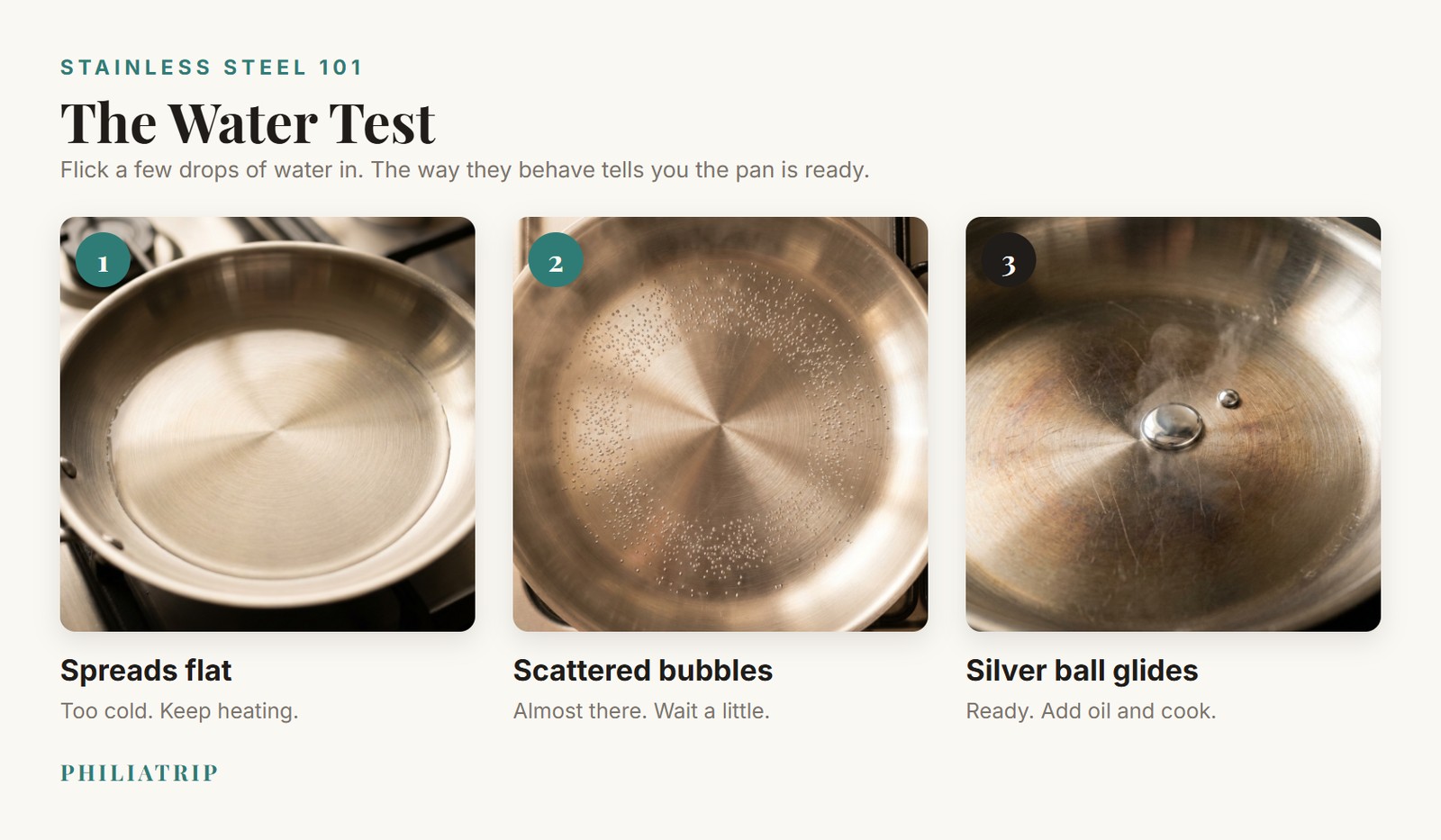
That gliding silver bead is the Leidenfrost effect. Once you see it, dry the pan, add your oil, let it shimmer, and start cooking.
Heat control: why medium beats high
Stainless steel conducts heat fast and evenly, so most home cooks run it too hot. High heat scorches food and oil, which then sticks and smokes.
- Preheat on medium, not high.
- Once food is in, you can lower the heat slightly to hold the sear.
- A tri-ply pan (an aluminum core bonded between stainless steel layers) spreads heat evenly, so you rarely need high heat to get a good sear.
If your oil smokes the moment it hits the pan, the pan is too hot. Take it off the heat for thirty seconds and start again.
Let it release: stop flipping too soon
When you place protein in a hot pan, it will stick at first. That is normal. As a crust forms, the food naturally loosens from the surface. If you try to flip it before the crust sets, it tears and leaves residue behind.
The rule: lay it down, leave it alone, and only move it once it releases without resistance. A properly seared piece of chicken or fish will lift off cleanly when it is ready.
Starting with a brand new stainless steel pan
A new stainless steel pan needs almost no preparation, which surprises people coming from nonstick or cast iron.
- Wash it with warm water and dish soap to remove any manufacturing residue, then dry it fully.
- There is no coating to cure and no mandatory seasoning. Some cooks do a light oil heating once for habit, but it is optional on stainless steel.
- From the first cook, use the water test and the medium heat rule. That is all it takes.
PHILIATRIP pans are uncoated tri-ply stainless steel (a 430 exterior, an aluminum core, and a food-grade stainless cooking surface), made in Taiwan, so there is no surface to break in and nothing to wear out over time.
A quick warning: do not shock a hot pan with cold water
It is tempting to rinse a hot pan under the tap right after cooking. Avoid it. Hitting hot stainless steel with cold water causes thermal shock, which can warp the base over time and make the pan sit unevenly on the burner.
Let the pan cool for a few minutes first, then wash it. If food is stuck on, add warm water and a little dish soap, let it sit, and it will lift off easily.
Common mistakes at a glance
- Cooking on high instead of preheating on medium.
- Skipping the water test and guessing.
- Adding food before the oil shimmers.
- Flipping protein before the crust releases it.
- Rinsing a screaming hot pan under cold water.
Frequently asked questions
Why do eggs stick to stainless steel?
Eggs are mostly protein, so they bond fast to cold metal. Preheat using the water test, add fat, and lower the heat slightly before the eggs go in. They will release once set.
Do you need to season a stainless steel pan?
No. Unlike cast iron, uncoated stainless steel does not require seasoning. Correct preheating does the work. A one time light oiling is optional, not necessary.
What oil is best for stainless steel?
Use an oil with a high smoke point such as avocado, grapeseed, or refined canola for searing. Add it after the pan passes the water test, not before.
Is it normal for food to stick at first and then release?
Yes. Seared protein grips the surface until a crust forms, then loosens on its own. Wait for the clean release instead of forcing the flip.
Can a stainless steel pan ever be as nonstick as a coated pan?
With correct heat it comes very close for most foods, and it does so without any coating that can scratch, flake, or wear out.
Ready to cook without the coating? PHILIATRIP uncoated tri-ply stainless steel cookware is built for clean searing, and the detachable handle takes the pan from stovetop to oven, then straight to the table.
See the collection →