

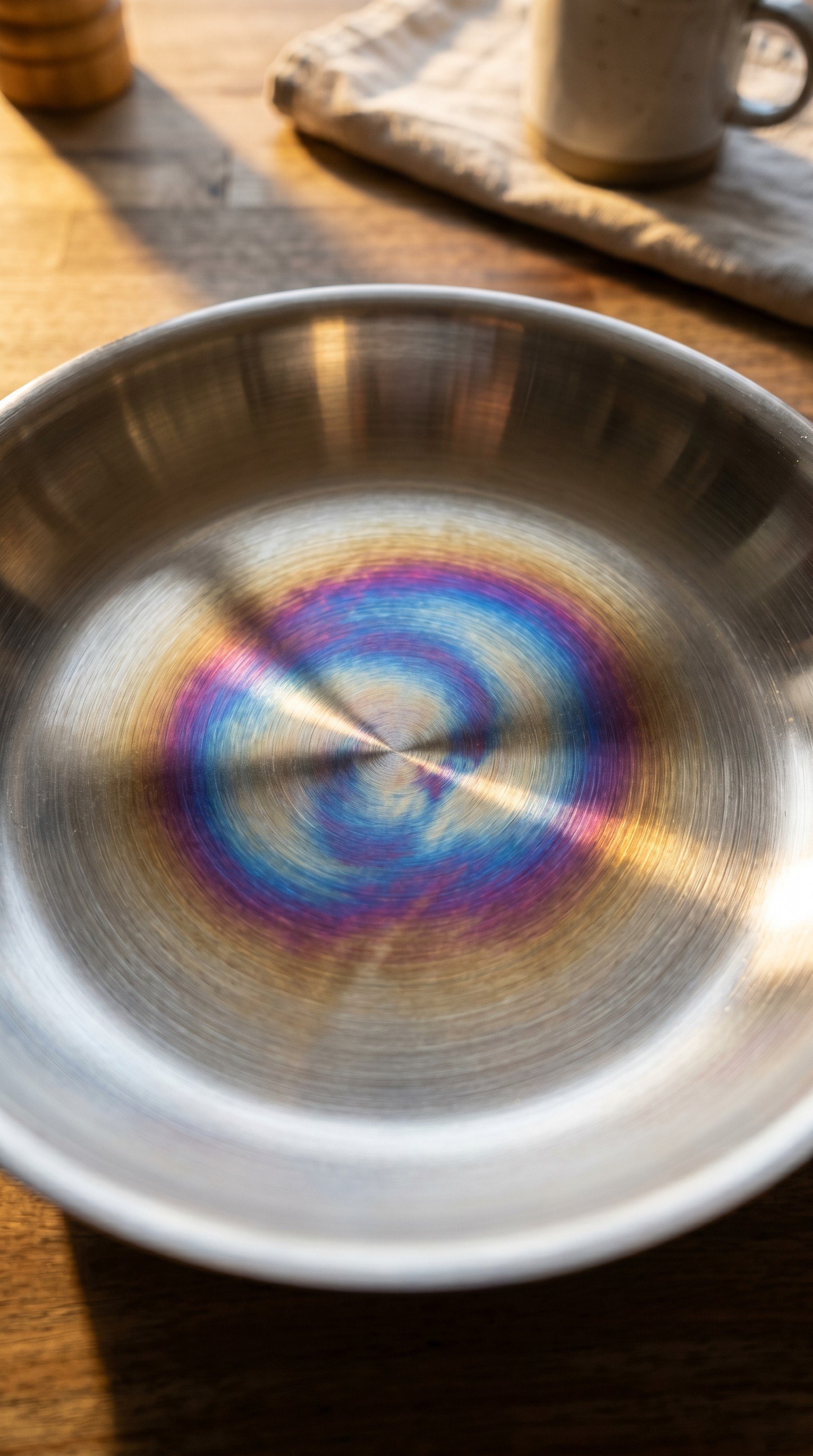
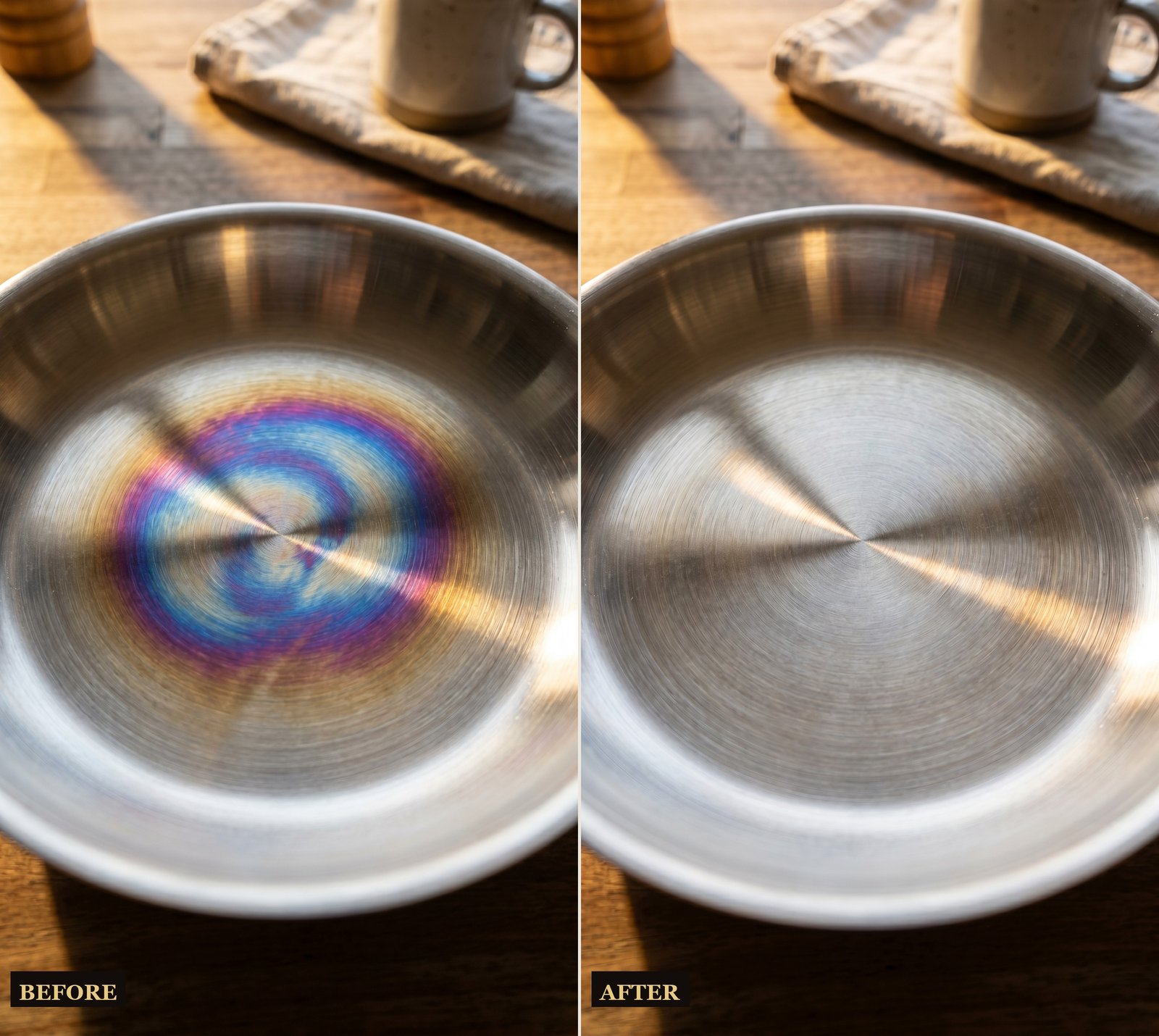
If your stainless steel pan has a blue, purple, or rainbow sheen across the bottom, here is the short answer: your pan is not ruined. That shimmer is called heat tint, and it is purely cosmetic. It does not affect how the pan cooks, and it is safe to keep using. Heat tint happens when an empty or nearly empty pan gets too hot, and the chromium in the steel reacts with oxygen to form a thin oxide layer. That layer bends light like a soap bubble, which is what you see as rainbow color. You can wipe it away with a little white vinegar. Here is the full picture, plus how to clean it and stop it from coming back.
What is the rainbow on my stainless steel pan?
The rainbow is "heat tint" (sometimes called a heat dome or temper color). Stainless steel contains chromium, the element that makes it rust resistant. When the surface gets hot, that chromium reacts with oxygen in the air and builds a slightly thicker oxide layer than normal.
That layer is extremely thin and transparent. Light reflecting off it creates a prism effect, the same way a film of oil on water or a soap bubble shows color. As the steel gets hotter, the layer thickens, and the color shifts. Mild heat gives a faint gold or straw color. More heat moves it toward purple, then blue. So the color is not a stain sitting on top of your pan. It is light refracting through an ultra thin oxide film.
Why did it happen to my pan?
Heat tint almost always comes from one thing: heating the pan too hot with little or no food or liquid inside to absorb the energy. Common triggers:
- Preheating an empty pan on high for too long
- Boiling a pot dry
- Cooking on a burner that is larger than the pan base
- Very high heat searing with little oil
None of these damage the steel. They simply push the surface temperature high enough to thicken the oxide layer. It is a normal property of stainless steel, not a manufacturing flaw or a sign of a cheap pan.
Is the rainbow tint safe to cook in?
Yes. Heat tint is purely aesthetic. It does not change heat conduction, cooking performance, or the safety of your food. The oxide layer is the same chromium oxide that already protects stainless steel from rust, just slightly thicker. You can cook on a rainbow pan today and nothing bad will happen. The only reason to remove it is appearance.
How to remove rainbow heat tint, step by step
The acid in white vinegar gently breaks down the thin oxide layer. This takes a few minutes, no scrubbing battle required.
- Cool the pan completely. Never work on a hot pan.
- Add white vinegar. Pour a thin layer of distilled white vinegar over the discolored area. For stubborn tint, let it sit for 5 to 10 minutes.
- Wipe with a soft cloth or sponge. Work in circles. The rainbow lifts and the bright metal returns.
- Rinse and dry. Rinse with warm water and dry with a towel to avoid water spots.
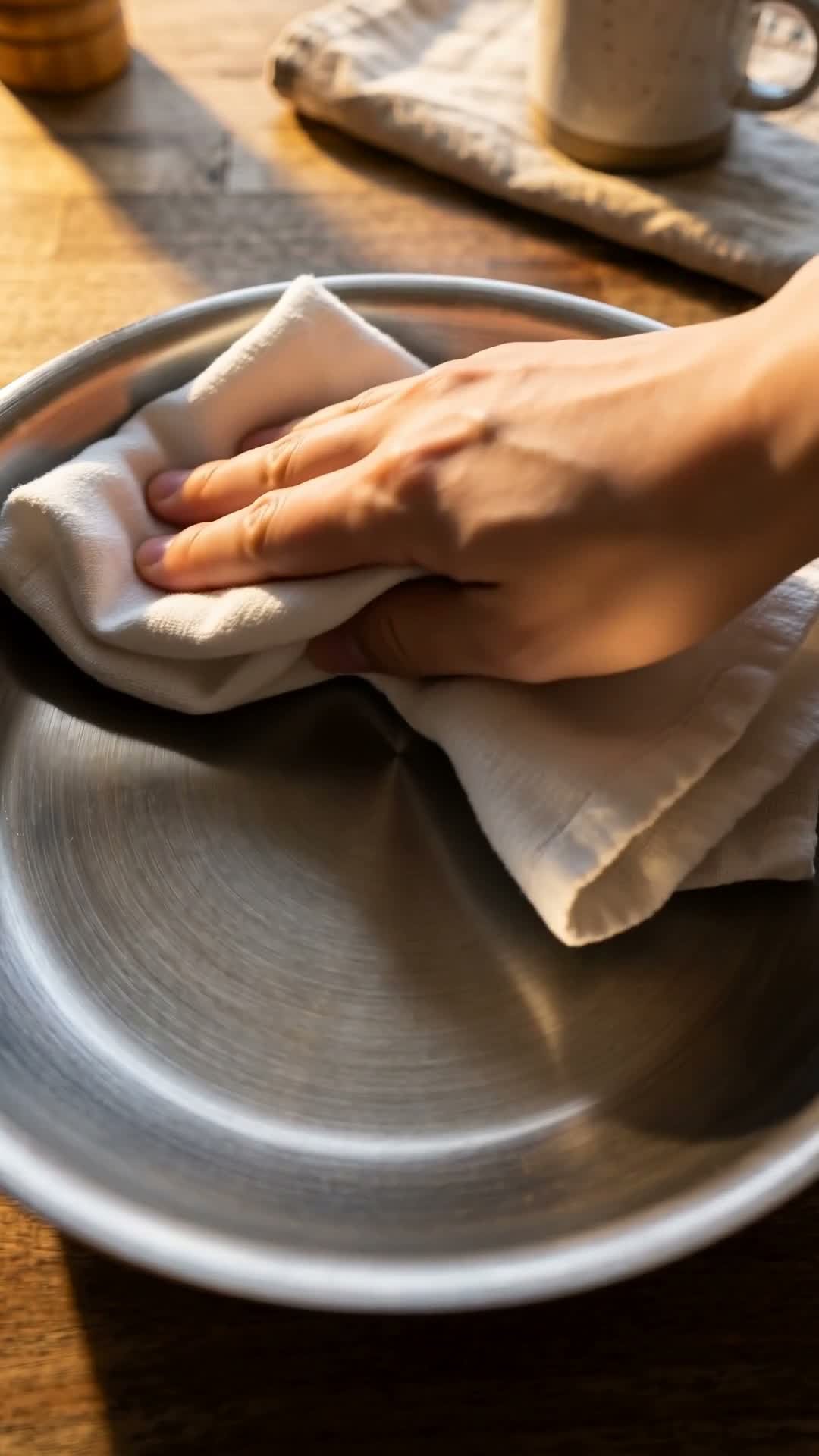
No vinegar? Use Bar Keeper's Friend. Make a paste with a little water, rub it on with a non-abrasive sponge, then rinse. One caution: do not leave Bar Keeper's Friend on the surface longer than about 2 minutes, because its oxalic acid can etch the steel if left too long.
One thing to avoid: never use steel wool or harsh metal scourers. They remove the tint but leave permanent micro scratches that dull the finish and make future sticking and staining worse. (This is also why food starts sticking on a scratched pan, which we cover in our guide on why food sticks to stainless steel.)
How to prevent stainless steel discoloration
You will never fully avoid heat tint over a pan's life, and that is fine. But you can reduce it:
- Match the burner size to the pan base
- Preheat on medium, not high, and only until a water drop dances (the Leidenfrost test)
- Add oil or food once the pan is hot, rather than letting an empty pan sit on high
- Avoid boiling pots dry
A well made tri-ply stainless pan heats evenly, which makes runaway hot spots and heavy tinting less likely in the first place.
The bottom line
A rainbow pan is a heated pan, not a broken one. It is safe, it is normal, and a little vinegar brings the shine back. So skip the panic, and keep the steel wool in the drawer.
Frequently asked questions
Is rainbow discoloration on stainless steel dangerous?
No. Heat tint is a thin, harmless layer of chromium oxide. It does not affect food safety or cooking performance. It is purely cosmetic.
Will the rainbow tint come off?
Yes. White vinegar or a Bar Keeper's Friend paste removes it easily. Avoid steel wool, which scratches the surface permanently.
Does heat tint mean my pan is low quality?
No. Heat tint happens to all stainless steel, including high-end tri-ply pans, when the surface gets very hot. It is a property of the metal, not a defect.
Can I still cook on a pan with rainbow stains?
Yes, immediately and safely. The tint does not affect how the pan performs.
How do I stop my stainless steel pan from discoloring?
Use medium heat, match the burner to the pan size, and add oil or food before the empty pan overheats.
PHILIATRIP cookware is uncoated tri-ply stainless steel with no coating to scratch or flake, built to take real heat and clean up fast. The detachable handle takes the pan from stovetop to oven, then straight to the table.
See the collection →